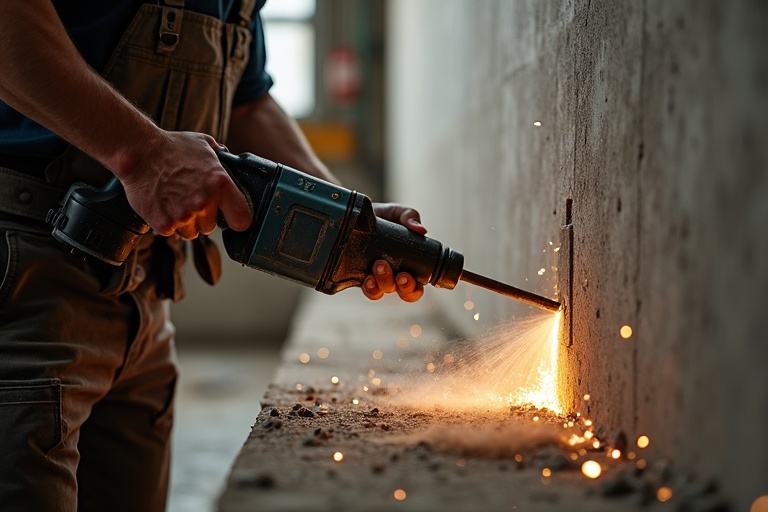
Concrete drilling is one of the most demanding tasks on any construction site. The difference between a clean, fast hole and a slow, frustrating experience often comes down to one thing — choosing the right SDS drill bit.
Understanding SDS Shank Types
SDS stands for “Special Direct System” and comes in three main variants:
SDS-Plus is the most common type, ideal for concrete, brick, and stone up to 4 inches in diameter. It features two open grooves and two closed grooves that allow the bit to move back and forth while being securely locked in place.:
SDS-Max is designed for heavy-duty rotary hammers and demolition work. The larger shank diameter handles bigger bits (up to 1-9/16 inches) and provides more impact energy transfer.:
SDS-Top is a less common variant used mainly in older European tools.:
Choosing the Right Diameter
The bit diameter should match your anchor or fastener requirements exactly. For standard applications:
- **Masonry anchors**: Bit diameter = anchor diameter
- **Rebar doweling**: Bit diameter = rebar diameter + 1/8 inch for epoxy
- **Conduit runs**: Bit diameter = conduit outer diameter + 1/4 inch
Tip Material Matters
Carbide-tipped bits are the industry standard for concrete work. Look for these grades:
- **Standard carbide**: General-purpose concrete, brick, block
- **Cross-tip (X-tip)**: Hard aggregate concrete, reinforced concrete
- **Full carbide head**: Heavy rebar, extremely hard stone
Maxim Power SDS Bit Recommendations
For general construction work with our SDS-Plus rotary hammers, we recommend our **Maxim Pro SDS-Plus 4-Cutter** bits. The four-flute design provides faster dust evacuation, while the premium carbide grade handles reinforced concrete with ease.
For demolition and heavy chiseling, pair your SDS-Max hammer with our **Maxim Heavy-Duty Chisel Set** — forged from chrome-vanadium steel and heat-treated for maximum durability.
Maintenance Tips
- Clear the flutes after every few holes to prevent dust buildup
- Check the carbide tip for chips or wear — a dull bit works harder and overheats
- Use the correct rotation mode: hammer-only for chiseling, hammer+rotate for drilling
- Apply steady, moderate pressure — let the tool do the work
Conclusion
The right SDS bit is an investment in productivity. A high-quality bit from Maxim Power not only drills faster and cleaner but also reduces strain on your rotary hammer, extending the life of both the bit and the tool.